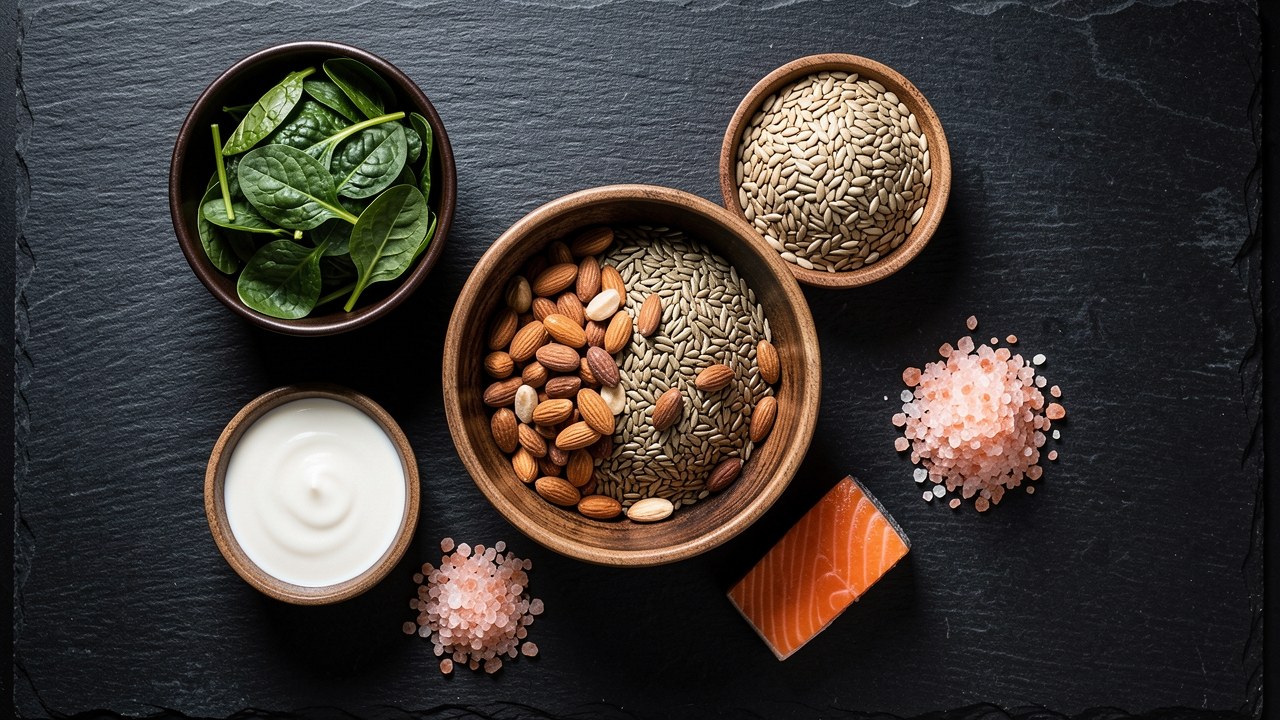
What Are Minerals and Why Are They Essential?
Minerals are inorganic nutrients that your body needs to function properly. They play roles in building strong bones, transmitting nerve signals, producing hormones, and maintaining a healthy immune system. Unlike some vitamins, minerals cannot be made by the body, so they must come from food or supplements.
Dietitians classify minerals into two groups based on the amount your body needs: macrominerals, which are required in larger amounts, and trace minerals, which are needed in smaller quantities. Both types are vital for health, but they work in different ways and are found in different foods.
Sources: Better Health Channel
Macrominerals: Calcium, Magnesium, and Potassium
Macrominerals are needed in larger amounts — typically more than 100 milligrams per day. This group includes calcium, phosphorus, potassium, sulfur, sodium, chloride, and magnesium. Each has unique functions.
Calcium is the most abundant mineral in the body and is vital for keeping bones strong and healthy. If you do not get enough calcium, your bones may become weak and brittle, potentially leading to osteoporosis. Good food sources of calcium include dairy products like milk, yogurt, and cheese, as well as some plant-based foods with added calcium, such as fortified soy milk, tofu, and breakfast cereals. Leafy greens like bok choy, kale, and broccoli also contribute.
Magnesium is important for maintaining bone health, using glucose for energy, supporting immune function, and regulating blood pressure and lung function. Potassium helps nerves, muscles, and the heart work properly and also helps lower blood pressure.
- Calcium: dairy products, leafy greens, fortified plant milks
- Magnesium: nuts, seeds, whole grains, leafy vegetables
- Potassium: bananas, potatoes, beans, and leafy greens
Sources: Better Health Channel
Trace Minerals: Iron, Zinc, Iodine, Selenium, and Copper
Trace minerals are required in smaller amounts — typically less than 100 milligrams per day. This group includes iron, zinc, iodine, selenium, copper, and manganese. Even though the body needs less of them, they are no less important.
Iron is involved in transporting oxygen in the blood, providing energy to cells, and helping the immune system function. Iron deficiency is common, affecting around one in eight people. Groups at higher risk include babies, young children, teenage girls, women with heavy periods, vegans, vegetarians, and people with chronic conditions.
Zinc is important for growth and development and immune function. It also helps produce the active form of vitamin A and transports it around the body. Iodine is essential for making thyroid hormones, which control metabolic rate and help the brain and body grow and develop.
Selenium and copper, while needed in trace amounts, are also essential. Selenium supports antioxidant defenses and thyroid function, while copper is involved in iron metabolism, nerve function, and connective tissue formation. Good food sources of selenium include Brazil nuts, seafood, and meats; copper is found in organ meats, shellfish, nuts, and whole grains.
- Iron sources: red meat, poultry, fish, lentils, beans, fortified cereals
- Zinc sources: oysters, beef, pumpkin seeds, lentils
- Iodine sources: iodized salt, seafood, dairy products
- Selenium sources: Brazil nuts, fish, meats
- Copper sources: organ meats, shellfish, nuts, whole grains
Sources: Better Health Channel
How Minerals Work with Vitamins
Minerals and vitamins often work together to support bodily functions. For example, zinc is needed to activate vitamin A and transport it in the body, ensuring that vitamin A can perform its roles in vision and immune function. Similarly, vitamin D enhances calcium absorption, and vitamin C can improve iron absorption from plant foods. These interactions highlight the importance of consuming a variety of nutrients together.
A balanced diet that provides a variety of foods is the best way to ensure you get the right mix of vitamins and minerals to support these interdependent functions.
Sources: Better Health Channel
Recommended Intakes and Dietary Sources
Dietary reference intakes (DRIs) provide guidance on the amounts of each nutrient needed to maintain health. Specific recommendations can vary by age, sex, and life stage. In the United States, the National Academies of Sciences, Engineering, and Medicine publish these values.
For most people, a varied diet that includes plenty of fruits, vegetables, whole grains, lean proteins, and dairy (or fortified alternatives) can provide the minerals needed. The table below summarizes key minerals, their functions, and common food sources. For current U.S. reference values, visit our page on dietary reference intakes.
| Mineral | Key Functions | Common Food Sources |
|---|---|---|
| Calcium | Builds and maintains strong bones | Milk, yogurt, cheese, leafy greens, fortified plant milks |
| Iron | Transports oxygen in blood; supports energy and immunity | Red meat, poultry, fish, beans, fortified cereals |
| Zinc | Supports growth, development, and immune function | Oysters, beef, pumpkin seeds, lentils |
| Iodine | Production of thyroid hormones | Iodized salt, seafood, dairy |
| Magnesium | Bone health, energy metabolism, blood pressure regulation | Nuts, seeds, whole grains, leafy vegetables |
| Selenium | Antioxidant defenses and thyroid function | Brazil nuts, fish, meats |
| Copper | Iron metabolism, nerve function, connective tissue formation | Organ meats, shellfish, nuts, whole grains |
Sources: Better Health Channel
Deficiency and Excess Risks
Not getting enough of a mineral can lead to deficiency symptoms. For example, inadequate calcium intake can result in weak and brittle bones, increasing the risk of osteoporosis. Iron deficiency can cause fatigue and impair immune function, while iodine deficiency can affect thyroid hormone production and metabolic rate. Zinc deficiency can impair growth and immune response, and magnesium deficiency may contribute to muscle cramps and fatigue. Selenium and copper deficiencies are less common but can affect thyroid function and iron transport, respectively.
Conversely, taking too much of a mineral, especially through supplements, can be harmful. Excessive intakes of some minerals can interfere with the absorption of others or cause toxicity. For instance, high doses of zinc can reduce copper absorption. It is important to follow recommended dietary allowances and avoid high-dose supplements unless a healthcare provider advises them.
Certain groups are at higher risk for deficiencies, including pregnant women, who have increased needs for iron and iodine. People following restrictive diets, such as vegans, may also need to pay extra attention to their mineral intake.
Sources: Better Health Channel
Frequently asked questions
What is the difference between macro and trace minerals?
Macrominerals are needed by the body in larger amounts (typically more than 100 mg per day), while trace minerals are required in smaller amounts (less than 100 mg per day). Both types are essential for health, but they are present in different quantities in the body and perform distinct functions.
Sources: Better Health ChannelWhich minerals are most commonly deficient in the American diet?
Based on available evidence, iron deficiency is common, affecting about one in eight people. Groups at higher risk include babies, young children, teenage girls, women with heavy periods, vegans, vegetarians, and people with chronic conditions.
Sources: Better Health ChannelCan you get all essential minerals from food alone?
For most healthy people, a varied and balanced diet can provide all essential minerals. However, certain life stages, such as pregnancy, may increase needs, and supplements might be recommended. For example, pregnant women are advised to take specific supplements for iron and iodine.
Sources: Better Health ChannelHow do minerals interact with each other?
Minerals can interact with each other, either by enhancing or inhibiting absorption. For instance, zinc helps activate vitamin A and transport it, showing a mineral-vitamin interaction. High doses of one mineral can compete with others for absorption, so balance is important.
Sources: Better Health ChannelWhat are signs of mineral deficiency?
Signs vary by mineral. Calcium deficiency can lead to weak, brittle bones and osteoporosis. Iron deficiency can cause fatigue, weakness, and impaired immunity. Iodine deficiency can affect thyroid function, leading to goiter or other metabolic issues. Zinc deficiency can impair growth and immune response, while magnesium deficiency may contribute to muscle cramps. Specific symptoms depend on which mineral is lacking.
Sources: Better Health ChannelIs it safe to take mineral supplements?
While supplements can be helpful for people with deficiencies or increased needs, taking excessive amounts of some minerals can be harmful and may interfere with absorption of other nutrients. It is best to rely on food as the primary source, and when considering supplements, especially in doses above the recommended dietary allowance, consult a healthcare provider.
Sources: Better Health ChannelSources
- Vitamins and minerals — Better Health Channel