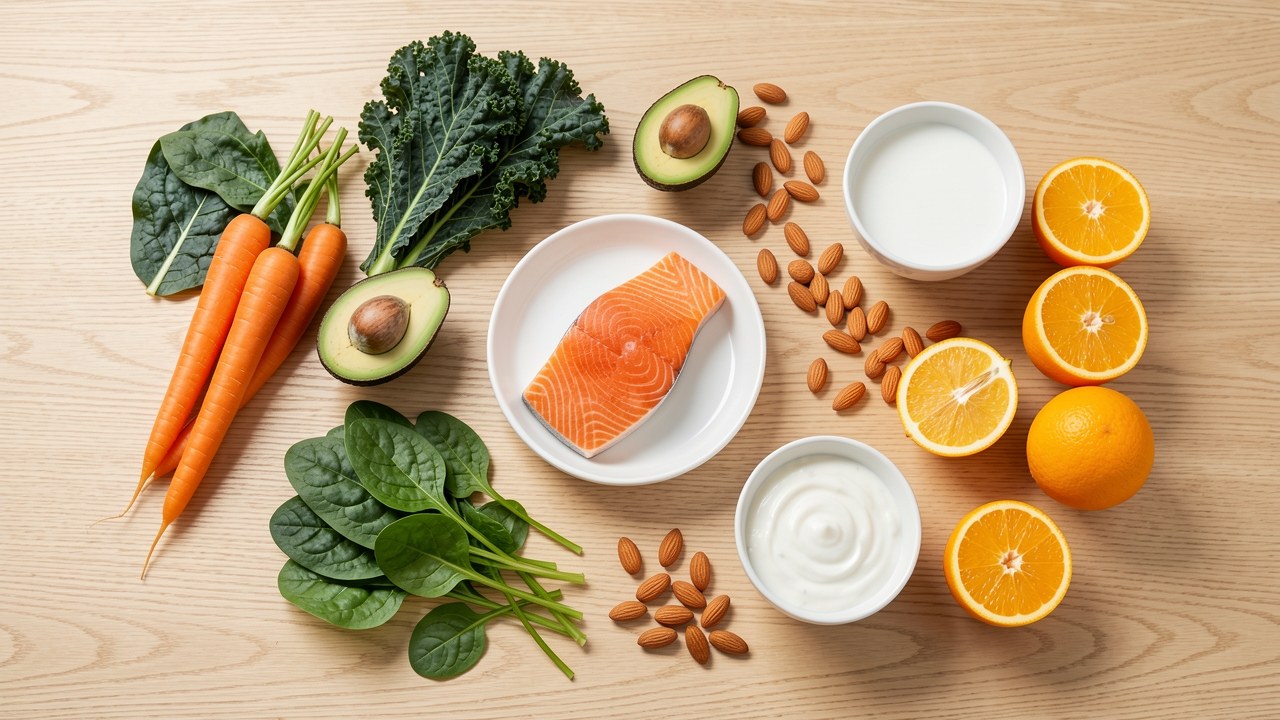
What Are Vitamins and Minerals?
Vitamins are organic compounds that your body needs in small amounts to carry out a variety of metabolic processes. Minerals, in contrast, are inorganic substances that also come from the foods you eat. Together, they are essential nutrients—meaning your body cannot make them in sufficient quantities, so you must get them from your diet.
There are 13 essential vitamins: vitamin A, vitamin C, vitamin D, vitamin E, vitamin K, and the eight B vitamins—thiamin (B1), riboflavin (B2), niacin (B3), pantothenic acid (B5), vitamin B6, biotin (B7), folate (B9), and vitamin B12. Your body also requires a range of minerals, including major minerals like calcium and magnesium and trace minerals like iron and zinc.
Sources: Better Health Channel, Victorian Government (Australia), MedlinePlus (U.S. National Library of Medicine), Oklahoma State University Extension, Utah State University Extension
Why They Matter for Health
Vitamins and minerals work behind the scenes to keep your body functioning. For example, vitamin A helps maintain healthy vision, skin, and immune function. The B vitamins help your body convert food into energy and are needed for cell multiplication and DNA synthesis. Vitamin C acts as an antioxidant, supports collagen formation for wound healing, and helps you absorb iron. Vitamin D is crucial for calcium absorption and bone health, while vitamin E protects cells from damage and vitamin K is essential for normal blood clotting.
Minerals are just as vital. Calcium builds strong bones and teeth and supports muscle contraction and nerve function. Iron carries oxygen in your blood as part of hemoglobin, while zinc is involved in immune function, protein and DNA synthesis, and wound healing. Magnesium participates in more than 300 chemical reactions, and potassium helps regulate fluid balance and nerve signals.
Sources: Better Health Channel, Victorian Government (Australia), MyHealth.Alberta.ca (Government of Alberta), MedlinePlus (U.S. National Library of Medicine), Oklahoma State University Extension
Fat-Soluble vs. Water-Soluble Vitamins
Vitamins are grouped by how they are absorbed and stored. Fat-soluble vitamins—A, D, E, and K—dissolve in fat and can be stored in your liver and fatty tissues. Because your body can store them, you don't need to consume them as frequently, but taking them in large amounts can lead to toxicity.
Water-soluble vitamins—vitamin C and the eight B vitamins—are not stored to any significant extent. Your body uses what it needs and excretes the excess in urine, so you need to consume them regularly through your diet. This also means that toxicity from water-soluble vitamins is less common, though very high doses from supplements can still cause adverse effects.
Sources: Better Health Channel, Victorian Government (Australia), MedlinePlus (U.S. National Library of Medicine), Utah State University Extension
Key Minerals
Minerals are often divided into major minerals, which you need in larger amounts, and trace minerals, which are needed in smaller amounts. Major minerals include calcium, magnesium, potassium, and sodium. Trace minerals include iron, zinc, iodine, selenium, and fluoride.
Each mineral has distinct jobs. Calcium is essential for bone health and muscle function. Magnesium helps with muscle and nerve function and is involved in hundreds of enzymatic reactions. Potassium and sodium work together for fluid balance and nerve transmission. Iron is a key component of hemoglobin, while zinc supports immunity and protein synthesis. Iodine is necessary for thyroid hormone production, selenium acts as an antioxidant, and fluoride helps prevent tooth decay.
Sources: MyHealth.Alberta.ca (Government of Alberta), Oklahoma State University Extension, Utah State University Extension
Recommended Intakes Overview
Health authorities have established dietary reference values to help you understand how much of each nutrient you need. For most adults, these are expressed as Recommended Dietary Allowances (RDAs) or Adequate Intakes (AIs) for specific vitamins and minerals, depending on age, sex, and life stage.
Because individual needs vary, general guidance from organizations like the U.S. National Institutes of Health and the Dietary Guidelines for Americans 2020–2025 suggests that most healthy people can meet their vitamin and mineral needs by eating a variety of nutrient-dense foods. However, certain groups—such as people on low-calorie diets, strict vegetarians or vegans, and those with certain medical conditions—may need to pay extra attention or consider supplements.
- For detailed, nutrient-specific values, see our Dietary reference intakes page.
- RDAs and AIs are set by expert panels and are meant to cover the needs of nearly all healthy individuals.
Sources: Better Health Channel, Victorian Government (Australia), National Center for Complementary and Integrative Health (NCCIH), NIH, Utah State University Extension
Food Sources vs. Supplements
Food is the preferred way to get vitamins and minerals because it provides them in a complex matrix of other beneficial compounds. A balanced diet rich in fruits, vegetables, whole grains, lean proteins, and dairy or fortified alternatives can supply most of the essential nutrients you need.
Supplements, including multivitamins, are intended to fill gaps, not replace a healthy diet. Data from the National Center for Complementary and Integrative Health shows that about one in three U.S. adults takes a multivitamin/multimineral supplement, but most studies show little or no effect on the risk of health problems like cancer or cardiovascular disease. Taking a daily multivitamin at normal doses is unlikely to cause harm for healthy people, but high doses of individual nutrients can lead to adverse effects, especially fat-soluble vitamins that can build up to toxic levels.
- If you're considering supplements, talk with your healthcare provider, especially if you have a medical condition or take medications.
- Remember: supplements are not a substitute for a healthful eating pattern.
Sources: Better Health Channel, Victorian Government (Australia), National Center for Complementary and Integrative Health (NCCIH), NIH, Utah State University Extension
Navigating the Reference Guide
This site is designed as a comprehensive hub for understanding vitamins and minerals. Explore the pages linked throughout this guide to delve into each topic in depth.
Start with our dedicated sections on fat-soluble vitamins and water-soluble vitamins to learn about individual nutrients, their functions, and food sources. For a closer look at minerals, visit the Minerals page. And if you want to understand recommended intakes and dietary reference values, our Dietary reference intakes page explains the science behind the numbers.
Why Adults Have Specific Vitamin Needs
As you age, your body's nutritional needs change. Adults may have different requirements for certain vitamins and minerals compared to children or adolescents. For example, the Recommended Dietary Allowance for vitamin D increases after age 70, and women of childbearing age need adequate folate to reduce the risk of neural tube defects during pregnancy.
Additionally, absorption of some nutrients, like vitamin B12, can decline with age. Adults who follow restricted diets—such as vegan or vegetarian patterns—may also have a higher risk of deficiencies in nutrients like B12, iron, and calcium, because some of the richest sources come from animal products. Being aware of your specific needs can help you make informed dietary choices.
- Vitamin B12 is naturally found only in animal products; fortified plant foods can help vegans meet their needs.
Sources: National Center for Complementary and Integrative Health (NCCIH), NIH, MedlinePlus (U.S. National Library of Medicine)
The 13 Essential Vitamins: Functions at a Glance
Each of the 13 essential vitamins has a specific job in the body. This overview highlights their primary roles.
- Vitamin A: healthy vision, immune function, skin, and mucous membranes
- Vitamin C: antioxidant; collagen formation, wound healing, iron absorption
- Vitamin D: calcium absorption, bone health, immune function
- Vitamin E: antioxidant; protects cells from damage
- Vitamin K: normal blood clotting, bone health
- Thiamin (B1): energy metabolism, nerve function
- Riboflavin (B2): energy metabolism, cellular function
- Niacin (B3): energy metabolism, DNA repair
- Pantothenic acid (B5): fatty acid metabolism
- Vitamin B6: amino acid metabolism, red blood cell production
- Biotin (B7): fatty acid synthesis, glucose metabolism
- Folate (B9): cell division, DNA synthesis
- Vitamin B12: red blood cell formation, neurological function
Sources: Better Health Channel, Victorian Government (Australia), MedlinePlus (U.S. National Library of Medicine)
Recommended Dietary Allowances (RDAs) for Adults
For adults, RDAs have been established for most vitamins and minerals, varying by age and sex.
For example, the RDA for vitamin C is 75 mg for adult women and 90 mg for adult men; for vitamin D it is 600 IU (15 mcg) for adults up to age 70, increasing to 800 IU (20 mcg) after age 70. These values are set by the National Academies of Sciences, Engineering, and Medicine, and are used as the basis for dietary guidance in the United States.
Because RDAs are tailored to population groups, the most reliable way to know your personal needs is to consult the full reference tables or speak with a registered dietitian. Our Dietary reference intakes page offers a more detailed look at these values.
Sources: National Center for Complementary and Integrative Health (NCCIH), NIH, Utah State University Extension
Top Food Sources for Each Essential Vitamin
Getting vitamins from food is the goal for most healthy people. Here are some of the richest food sources for each essential vitamin.
- Vitamin A: liver, fish oils, milk, eggs, and orange/yellow vegetables like carrots and sweet potatoes
- Vitamin C: citrus fruits, strawberries, bell peppers, broccoli, and tomatoes
- Vitamin D: fatty fish (salmon, tuna), fortified milk and cereals, and egg yolks; also synthesized by skin from sunlight
- Vitamin E: nuts, seeds, vegetable oils, and spinach
- Vitamin K: leafy green vegetables like kale, spinach, and broccoli; also in soybeans and canola oil
- Thiamin: pork, whole grains, enriched cereals, and legumes
- Riboflavin: milk, yogurt, eggs, lean meats, and green vegetables
- Niacin: poultry, beef, fish, peanuts, and fortified grains
- Pantothenic acid: chicken, beef, potatoes, oats, and tomatoes
- Vitamin B6: poultry, fish, potatoes, chickpeas, bananas, and fortified cereals
- Biotin: eggs, nuts, and soybeans
- Folate: leafy green vegetables, legumes, and fortified grains
- Vitamin B12: only in animal products such as meat, fish, poultry, and dairy; fortified plant foods for vegans
Sources: Better Health Channel, Victorian Government (Australia), MedlinePlus (U.S. National Library of Medicine)
When Diet Isn't Enough: Supplements for Adults
For most healthy adults, a well-balanced diet provides all the essential vitamins and minerals. However, certain situations might make it difficult to get enough through food alone.
People who may benefit from supplements include those on low-calorie diets, strict vegetarians or vegans (especially for vitamin B12), people with conditions that affect nutrient absorption, and older adults who may have increased needs or reduced absorption of nutrients like vitamin D and B12.
If you decide to take a supplement, choose one that provides no more than the Daily Value (DV) for most nutrients, unless your healthcare provider recommends otherwise. Be cautious with high doses of fat-soluble vitamins (A, D, E, K), as they can accumulate to toxic levels. Also, remember that dietary supplements are not regulated as strictly as prescription drugs, and the evidence that multivitamins prevent chronic disease is limited.
- Always inform your doctor about any supplements you take.
Sources: Better Health Channel, Victorian Government (Australia), National Center for Complementary and Integrative Health (NCCIH), NIH, MedlinePlus (U.S. National Library of Medicine)
Simple Daily Habits to Meet Your Vitamin Needs
Meeting your vitamin and mineral needs doesn't have to be complicated. Small, consistent choices can help you build a nutrient-rich diet.
- Eat a variety of colorful fruits and vegetables each day.
- Include whole grains, lean proteins, and low-fat or fortified dairy (or plant-based alternatives) in your meals.
- Choose foods in their least processed forms when possible.
- Plan meals to include different food groups.
- If you follow a special diet, think about nutrients that might be lacking and look for fortified products or supplements as needed.
Sources: Better Health Channel, Victorian Government (Australia), Utah State University Extension
Frequently asked questions
What's the difference between vitamins and minerals?
Vitamins are organic compounds that your body needs in small amounts to support metabolic processes; minerals are inorganic substances that also come from food and are essential for structure and function, such as bones, oxygen transport, and nerve signaling.
Sources: Better Health Channel, Victorian Government (Australia), Oklahoma State University ExtensionCan I get enough vitamins from food alone?
For most healthy adults, yes. A balanced diet rich in fruits, vegetables, whole grains, lean proteins, and dairy or fortified alternatives can provide all essential vitamins and minerals. Certain groups, like people on restricted diets or with medical conditions, may need supplements.
Sources: Better Health Channel, Victorian Government (Australia), Utah State University ExtensionWhat does 'essential' mean for a vitamin?
An essential vitamin is one that your body cannot make itself in sufficient amounts, so you must obtain it from your diet. There are 13 essential vitamins, each performing unique roles in the body.
Sources: Better Health Channel, Victorian Government (Australia), MedlinePlus (U.S. National Library of Medicine)Should I take a daily multivitamin?
For most healthy adults, the evidence does not show that multivitamins prevent chronic diseases like cancer or heart disease. They are not a substitute for a healthy diet. If you have specific gaps, your healthcare provider might recommend one, but at normal doses it's generally not harmful.
Sources: National Center for Complementary and Integrative Health (NCCIH), NIHHow do I know if I have a vitamin deficiency?
Symptoms vary by nutrient. For example, vitamin C deficiency can cause scurvy with fatigue and bleeding gums; vitamin D deficiency can lead to bone pain and weakness. Blood tests can confirm deficiencies. If you suspect one, talk with your doctor.
Sources: Better Health Channel, Victorian Government (Australia)Do adults really need vitamin supplements?
Only in specific situations. Adults on low-calorie diets, strict vegetarians or vegans, and those with certain medical conditions may need supplements. For others, a nutrient-dense diet is typically enough.
Sources: National Center for Complementary and Integrative Health (NCCIH), NIHWhich vitamins are most commonly deficient in adults?
Based on general nutrition knowledge, vitamin D, vitamin B12, iron, and folate are among those that can be low in certain populations.
Sources: Better Health Channel, Victorian Government (Australia), MedlinePlus (U.S. National Library of Medicine)Can I get all essential vitamins from food alone?
Yes, if you eat a varied and balanced diet. However, some vitamins like B12 are naturally only in animal products, so strict vegans need fortified foods or supplements to meet their needs.
Sources: Better Health Channel, Victorian Government (Australia), MedlinePlus (U.S. National Library of Medicine)Sources
- Vitamins and minerals — Better Health Channel, Victorian Government (Australia)
- Vitamins and Minerals | NCCIH — National Center for Complementary and Integrative Health (NCCIH), NIH
- Minerals: Their Functions and Sources — MyHealth.Alberta.ca (Government of Alberta)
- Vitamins: MedlinePlus Medical Encyclopedia — MedlinePlus (U.S. National Library of Medicine)
- Minerals and the Body — Oklahoma State University Extension
- The Importance of Vitamins and Minerals to Overall Health — Utah State University Extension