What Is Vitamin C and What Does It Do?
Vitamin C, also known as ascorbic acid, is a water-soluble vitamin that your body cannot produce on its own. That makes it an essential part of your diet—you must get it from food or supplements. Once absorbed, vitamin C acts as a cofactor for several enzymes, meaning it helps these enzymes do their jobs.
One of its most important jobs is helping your body synthesize collagen, a structural protein found in skin, tendons, ligaments, and blood vessels. Vitamin C is also involved in making L-carnitine and certain neurotransmitters, which are chemicals that send signals between nerve cells.
Sources: NIH Office of Dietary Supplements, Linus Pauling Institute, Oregon State University
Vitamin C and Immune Health: What the Evidence Says
Vitamin C is often associated with immune function, and for good reason. It supports the immune system by helping maintain the skin's barrier—the first line of defense against pathogens—and by enhancing the function of white blood cells like neutrophils.
Regular intake of 100–200 mg per day may help support various cellular functions of both the innate and adaptive immune systems. However, the idea that vitamin C can prevent the common cold is not supported by strong evidence. While regular supplementation does not appear to prevent colds, it may slightly shorten the duration or reduce symptom severity. Taking vitamin C after a cold starts does not seem to help.
Severe deficiency can impair immunity and increase susceptibility to infections, underscoring the importance of getting enough vitamin C.
Sources: Nutrients (MDPI) via PubMed Central, Harvard Health Publishing, Mayo Clinic
Vitamin C as an Antioxidant and Collagen Synthesis
Vitamin C is a potent antioxidant. It helps protect your cells from damage caused by free radicals and reactive oxygen species—unstable molecules that can harm proteins, lipids, and DNA. This antioxidant activity is one reason vitamin C is often linked to overall health and aging.
Equally important is vitamin C's role in collagen synthesis. Collagen is the most abundant protein in your body, providing structure to skin, tendons, ligaments, and blood vessels. Vitamin C is required for the chemical reactions that stabilize collagen fibers. Without enough vitamin C, your body cannot properly repair wounds or maintain strong connective tissue.
Sources: Linus Pauling Institute, Oregon State University, NIH Office of Dietary Supplements
Food Sources of Vitamin C: Best Dietary Choices
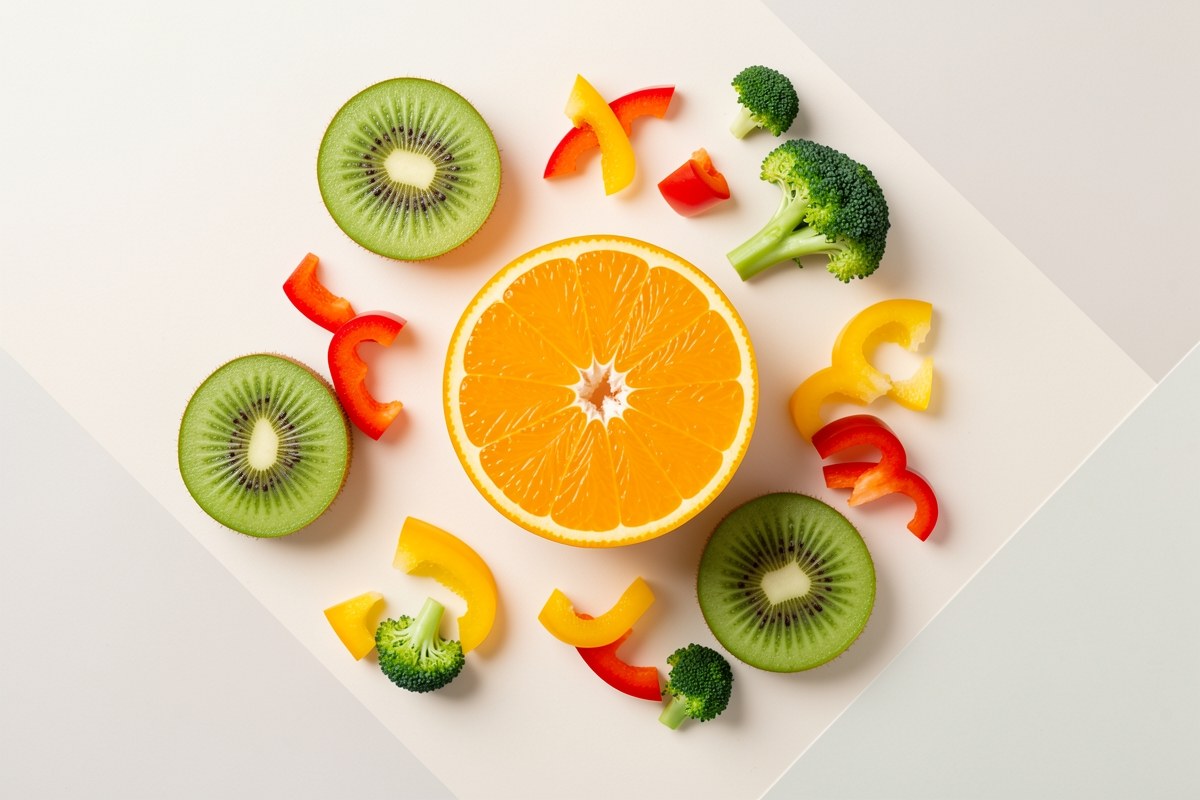
Many fruits and vegetables are excellent sources of vitamin C. Citrus fruits are well known, but you can also get plenty from peppers, kiwi, broccoli, strawberries, Brussels sprouts, and cantaloupe. Including a variety of these foods in your daily diet is the best way to meet your needs.
Because vitamin C is water-soluble and sensitive to heat, cooking can reduce its content. Prolonged storage and boiling cause the greatest losses. To preserve more vitamin C, try steaming or microwaving vegetables instead of boiling them.
- Red and green peppers
- Citrus fruits (oranges, grapefruit)
- Kiwi
- Broccoli
- Strawberries
- Brussels sprouts
- Cantaloupe
Sources: NIH Office of Dietary Supplements, Mayo Clinic, Harvard Health Publishing
Recommended Intake (RDA) and Factors That Increase Needs
The Recommended Dietary Allowance (RDA) for vitamin C is 90 mg per day for adult men and 75 mg per day for adult women. This is the amount that meets the needs of nearly all healthy individuals.
Certain factors increase your needs. People who smoke require an additional 35 mg per day compared to nonsmokers, bringing the recommendation to 125 mg for men who smoke and 110 mg for women who smoke. Exposure to secondhand smoke may also increase needs. If you have a medical condition that affects absorption, you might need more—but it's best to consult a healthcare provider for personalized advice.
| Group | RDA (mg/day) |
|---|---|
| Adult men (19+ years) | 90 |
| Adult women (19+ years) | 75 |
| Men who smoke | 125 |
| Women who smoke | 110 |
Sources: NIH Office of Dietary Supplements, Harvard Health Publishing
Vitamin C Deficiency: Symptoms of Scurvy and Risk Groups
Severe vitamin C deficiency leads to scurvy, a potentially fatal disease. Although rare in the United States, scurvy is still possible, especially in people with very limited diets. Symptoms include subcutaneous bleeding, poor wound healing, easy bruising, and joint pain.
Early signs of deficiency are more subtle and may include fatigue, gum inflammation, joint pain, and slow wound healing. If you notice these symptoms and think your vitamin C intake might be low, it's worth discussing with a healthcare provider.
Some groups are at higher risk of inadequate vitamin C levels. Smokers, people exposed to secondhand smoke, and those with limited food variety or malabsorption issues are particularly vulnerable. People who follow very restrictive diets, such as an all-meat diet, also have increased risk.
- Fatigue
- Gum inflammation
- Joint pain
- Poor wound healing
- Easy bruising (later stage)
Sources: Linus Pauling Institute, Oregon State University, NIH Office of Dietary Supplements, Mayo Clinic
Vitamin C Supplements: Dosage, Safety, and Common Myths
Supplements can help you meet your vitamin C needs, especially if your diet falls short. However, more isn't always better. Your body absorbs vitamin C less efficiently at high doses, and any excess is excreted in urine. The Tolerable Upper Intake Level (UL) for adults is 2,000 mg per day. Consistently taking more than that can cause digestive issues like diarrhea, nausea, and stomach cramps.
There are several myths about vitamin C. Let's separate fact from fiction. One common myth is that vitamin C prevents colds. As noted earlier, it does not prevent colds, but it may slightly shorten a cold's duration if taken regularly. Another myth is that supplements are always better than food. While supplements can help, whole foods provide a range of other beneficial nutrients and fiber. Food sources are generally preferred for meeting RDA.
High-dose vitamin C supplements (above 2,000 mg/day) may rarely increase the risk of kidney stones, particularly in individuals with kidney disorders. If you have a history of kidney stones, talk to your doctor before taking high-dose vitamin C.
If you're considering a supplement, choose one that fits within the UL and is appropriate for your individual needs. For most people, a dose of 100–200 mg per day is sufficient to support health.
- Stick to doses within the UL of 2,000 mg/day for adults to avoid stomach upset.
- Consider whether food sources can meet your needs first.
- Be cautious with high doses if you have a history of kidney stones.
Sources: Linus Pauling Institute, Oregon State University, National Academies Press (US), NIH Office of Dietary Supplements, Mayo Clinic, Harvard Health Publishing
Frequently asked questions
Can vitamin C prevent or cure the common cold?
Regular vitamin C supplementation does not appear to prevent the common cold. However, it might slightly reduce the duration of a cold or lessen symptom severity. Taking vitamin C after you already have a cold has not been shown to help. The evidence suggests that while vitamin C supports immune function, it is not a preventive or cure for the common cold.
Sources: Harvard Health Publishing, Mayo ClinicIs it possible to take too much vitamin C?
Yes. The Tolerable Upper Intake Level (UL) for adults is 2,000 mg per day. Taking more than this can cause diarrhea, nausea, and stomach cramps. Rarely, very high doses may contribute to kidney stones, especially in individuals with kidney disorders.
Sources: National Academies Press (US), NIH Office of Dietary Supplements, Mayo Clinic, Harvard Health PublishingWhat are the signs of vitamin C deficiency?
Early signs include fatigue, gum inflammation, joint pain, and poor wound healing. Severe deficiency leads to scurvy, which can cause subcutaneous bleeding, easy bruising, and further joint pain. Scurvy is potentially fatal, so it's important to address deficiency promptly.
Sources: Mayo Clinic, Linus Pauling Institute, Oregon State UniversityDoes cooking destroy vitamin C in foods?
Yes. Vitamin C is water-soluble and heat-sensitive. Boiling and prolonged storage cause the greatest losses. To minimize loss, consider steaming or microwaving vegetables instead of boiling.
Sources: Harvard Health Publishing, NIH Office of Dietary SupplementsCan vitamin C help with iron absorption?
Yes. Vitamin C enhances the absorption of non-heme iron, the type of iron found in plant-based foods. Eating vitamin C-rich foods alongside iron-rich plant foods can help you absorb more iron.
Sources: Linus Pauling Institute, Oregon State University, Harvard Health Publishing, NIH Office of Dietary SupplementsIs it better to get vitamin C from food or supplements?
For most people, food is the preferred source because it provides vitamin C along with other beneficial nutrients and fiber. However, supplements can help those who have difficulty meeting needs through diet alone, such as smokers or people with limited food variety. It's important to stay within the upper limit of 2,000 mg per day when using supplements.
Sources: NIH Office of Dietary Supplements, Harvard Health Publishing, Mayo ClinicSources
- Vitamin C - Health Professional Fact Sheet — NIH Office of Dietary Supplements
- Vitamin C — Linus Pauling Institute, Oregon State University
- Vitamin C - Dietary Reference Intakes for Vitamin C, Vitamin E, Selenium, and Carotenoids — National Academies Press (US)
- Vitamin C — Mayo Clinic
- Vitamin C and Immune Function — Nutrients (MDPI) via PubMed Central
- Myths and truths about vitamin C — Harvard Health Publishing